Take back control of your LLM spend
One unified interface to Claude, Gemini and ChatGPT — routing cheap work to a local model, anonymising what leaves your network, and logging every query.
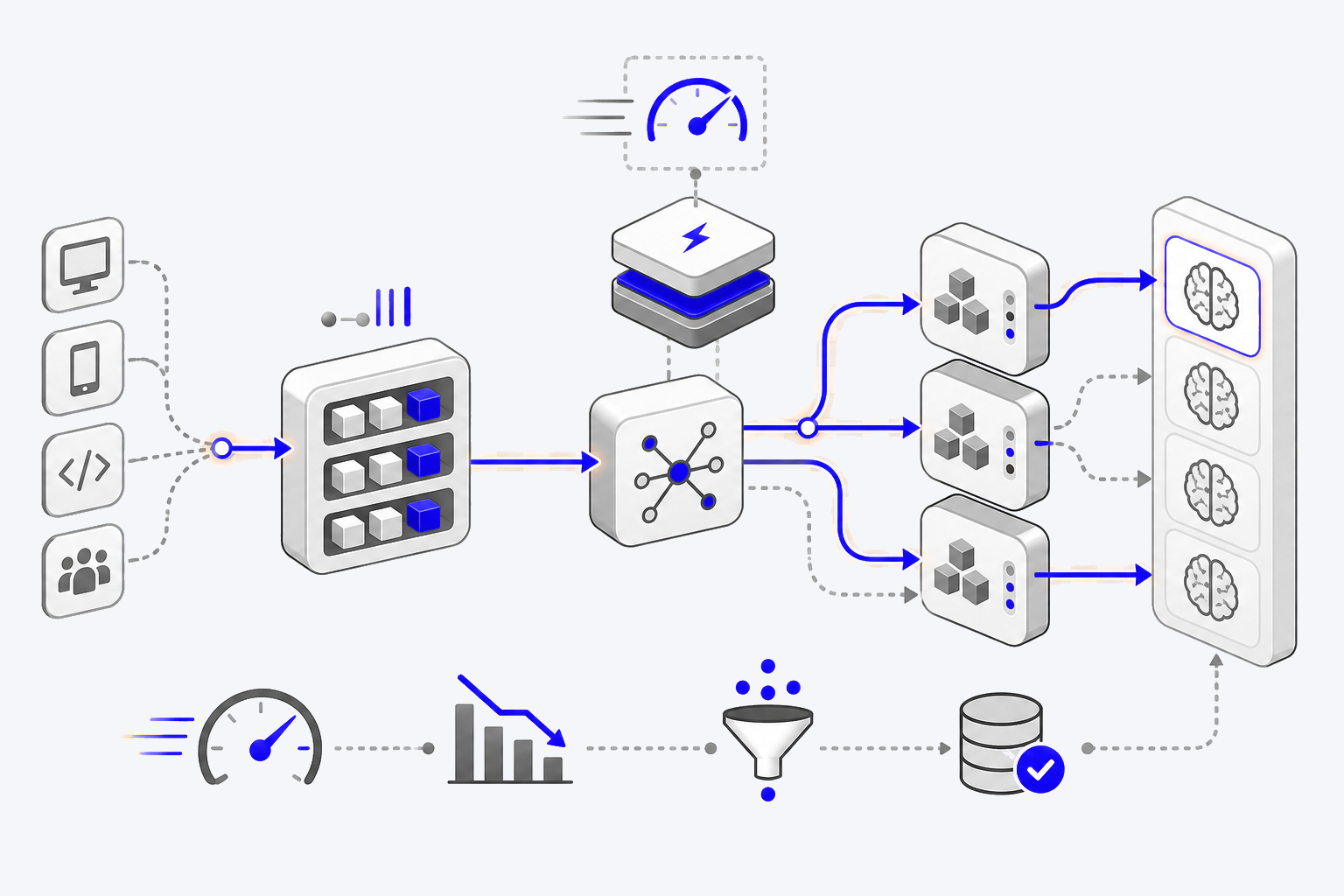
One interface in front of every major model — and the best open-source



Why can’t Anthropic or OpenAI do this for you?
Because they each sell one model — theirs. Arkline is independent: we route, compare and switch across all of them, in your interest, not a provider’s.
Locked to one model
Anthropic only sells you Claude; OpenAI only sells you ChatGPT. Their interest is keeping you on their model — not finding you the best or cheapest one for the job.
Frontier prices for everything
Every call is billed at frontier rates — even the trivial, repeated ones a small local model could answer for free.
Your knowledge walks out
Prompts, answers and decisions scatter across GUIs, IDEs and terminals — and leave with the people who made them.
What Arkline does
The independent efficiency layer for the age of LLMs.
Model-agnostic by design
One interface to Claude, Gemini, ChatGPT and the leading open-source models. Swap any model for another without changing how your team works.
A protection layer against lock-in
We track the best open-source models and silently validate them against the commercial ones on your real queries — so if prices spike, switching is a decision, not a scramble.
Benchmarks that fit your business
Forget synthetic leaderboards. We benchmark models on your actual processes, update continuously as your work evolves, and keep you and your team informed.
Spend only where it counts
Cheap and repeated work stays on a local model; near-identical calls are reused from your history, not re-billed to a frontier API.
See every use case
Track LLM use across your org at any granularity: what problems are being solved, what tasks are being delegated, by whom, and at what cost.
Own your team’s knowledge
Every question, answer and brainstorm is captured in a retrievable vector database — and turned into onboarding material for new recruits.
Protection layer
If there’s no difference for you, why pay?
We benchmark models on your queries — not synthetic leaderboards — and silently check the best open-source models against the commercial ones as your business evolves. You and your team always see the comparison.
When open-source matches Claude on your tasks, you can move parts of your business over — and stop paying frontier prices for work that no longer needs them. If token prices rise, you’re already protected.
Score on your tasks
Live, continuously-updated benchmarks on your own workload. When the gap closes, Arkline flags it — and the cheaper model is one switch away. Illustrative.
How it works
Cut the bill, not the capability.
Every request flows through Arkline first. We answer what we can from memory or a local model, send only what genuinely needs a frontier model — anonymised — and log it all.
Monthly frontier-token spend
Local routing and answer-reuse keep most calls off the metered APIs. The dark bar is what you’d spend going direct; the indigo is what reaches a frontier model through Arkline. Illustrative.
Reuse before you pay
A repeated or near-identical question is answered from your own history or a local model — never re-billed to a frontier API.
Local-first routing
Trivial and short tasks run on a local model. Nothing leaves your network, and nothing is metered.
Prompt assist & summaries
Custom prompt suggestions help calls land first time — fewer costly retries — and every answer is captured as a reusable markdown summary.
Spend you can see
Per-account logging shows who spends what, so you can set budgets and cut waste with confidence.
Knowledge that stays
Don’t let the job market reset your operations.
Arkline creates onboarding material as your team brainstorms with their favourite models. Every question and answer is logged to a vector database, and new recruits ramp on how your team actually works. Own every stage of your development — and every idea — in a retrievable RAG.
Capture
Questions, answers and brainstorms with Claude, Gemini, ChatGPT or open-source models are recorded as they happen.
Store
Everything lands in a searchable vector database — your team’s own retrievable knowledge base.
Onboard
Arkline continuously turns it into clear onboarding material, so new recruits start from your team’s real context.